
SEO vs AEO: What Businesses Must Understand Today
Not long ago, growing a business online followed a fairly predictable path. Search Engine Optimization was the primary focus, and achieving higher positions on Google often translated directly into increased visibility, steady website traffic, and more customers. At that time, users searched using short phrases and browsed through links to find information. Today, that behavior has changed significantly. People now search in a more conversational way, asking complete questions, using voice-enabled devices, and depending on AI tools to deliver quick, precise answers. This shift has brought Answer Engine Optimization, or AEO, into the spotlight and made the discussion around SEO vs AEO more important than ever for businesses aiming to stay competitive.
The real discussion for businesses today is not about whether SEO still has value—it certainly does. The bigger question in the evolving debate of SEO vs AEO is whether relying on SEO alone is enough to keep up with modern search behavior. SEO continues to play a vital role in building long-term visibility and organic reach, while AEO focuses on clarity, relevance, and trust. AEO helps content stand out as a reliable answer that search engines and AI systems are confident in presenting directly to users.
For long-term and sustainable growth, businesses no longer need to choose sides in the conversation of SEO vs AEO. Success lies in understanding how the two complement each other. Those who adapt early and align their strategies with both discovery and answer-based search are far more likely to remain visible, credible, and competitive in a search environment that is becoming increasingly conversational and user-focused.
Understanding SEO (Search Engine Optimization)

Search Engine Optimization (SEO) is the practice of optimizing a website to improve its visibility and ranking on search engine results pages such as Google and Bing. In the broader discussion of SEO vs AEO, SEO remains the foundation for attracting organic traffic by ensuring that a website appears when users search for relevant products, services, or information. Unlike paid advertising, SEO focuses on long-term growth by building a strong online presence that search engines recognize as valuable and trustworthy.
SEO involves multiple components working together. Keyword research helps identify what users are searching for and how they phrase their queries. On-page SEO focuses on optimizing content, headings, meta descriptions, and internal links so that search engines can clearly understand the topic of each page. Technical SEO ensures that a website loads quickly, works smoothly on mobile devices, and is easy for search engines to crawl and index. Off-page SEO, such as backlink building, helps establish authority and credibility by showing that other trusted websites recognize the content as valuable.
Beyond rankings, SEO also improves user experience. Well-structured content, fast-loading pages, and easy navigation make websites more useful for visitors. When evaluating SEO vs AEO, it becomes clear that SEO provides the long-term structural strength needed for digital visibility. In the long run, effective SEO helps businesses build trust, increase brand visibility, and generate consistent leads and conversions without continuously spending on ads.
Understanding AEO (Answer Engine Optimization)

Answer Engine Optimization (AEO) is a contemporary approach to digital marketing that centers on delivering clear, accurate, and immediate answers to user queries. Within the broader comparison of SEO vs AEO, AEO reflects the growing importance of answer-focused search experiences. While traditional SEO concentrates on improving rankings within search engine results pages, AEO aims to position content where users receive direct responses, such as featured snippets, “People Also Ask” boxes, voice assistant replies, knowledge panels, and AI-generated summaries. As search platforms increasingly prioritize instant answers over lists of links, AEO has become essential for sustaining visibility.
The rise of AEO is closely connected to evolving search behavior. Modern users rely on conversational language, particularly when using voice search or mobile devices. Instead of entering short keyword phrases, they ask complete, natural questions. AEO responds to this shift by organizing content around those real-world queries and presenting information in a concise, structured format that search engines and AI systems can easily interpret. In the context of SEO vs AEO, AEO places greater emphasis on clarity and immediacy rather than simply achieving higher rankings.
Implementing AEO involves creating well-structured content with clear headings, question-based sections, summaries, and FAQ formats. In the ongoing comparison of SEO vs AEO, traditional SEO focuses on ranking pages through keywords, backlinks, and technical optimization, while AEO concentrates on delivering precise, direct answers that search engines can extract instantly. AEO relies heavily on intent-focused writing, simple language, and logical content flow. Technical elements such as structured data and schema markup further help search engines understand and present relevant information accurately.
While AEO may not always generate direct clicks, it plays a powerful role in building authority and trust. In the debate of SEO vs AEO, SEO drives traffic, but AEO builds visibility within featured snippets, voice search results, and AI-generated responses. Businesses that consistently provide reliable answers become recognized as credible sources. In an AI-driven and voice-first search environment, AEO helps brands stay relevant, visible, and competitive, making it a crucial part of future-ready digital marketing strategies.
Why AEO Is Becoming More Important

Key Differences Between SEO and AEO
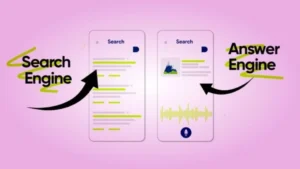
SEO and AEO are often discussed together, but they serve different roles in how people find and engage with information online. In the broader AEO vs SEO conversation, the key difference lies in visibility versus direct response. SEO is primarily concerned with improving a website’s position on search engine results pages. It focuses on elements such as keyword usage, content quality, site structure, technical performance, backlinks, and overall user experience. The aim is to increase visibility and encourage users to visit a website when they search for relevant topics.
In contrast, AEO focuses on optimizing content so it can be selected and displayed as a clear, immediate answer within search results, voice assistants, and AI-generated summaries. While SEO drives organic traffic through rankings, AEO aims to satisfy user intent instantly by delivering concise, structured answers directly within the search experience.
AEO takes a different approach. Instead of concentrating mainly on rankings, it focuses on delivering clear and precise answers to specific questions. Content created for AEO is organized in a way that allows search engines, voice assistants, and AI platforms to quickly understand and present the information. This type of optimization often leads to exposure through featured answers, voice search results, or AI-generated responses, even when users do not click through to a website.
The way users interact with content also differs between the two. SEO is largely driven by clicks and traffic, while AEO prioritizes visibility and credibility in answer-based search results. SEO supports steady, long-term growth through organic traffic, whereas AEO helps build authority and relevance in modern search environments. When used together, they strengthen each other rather than compete.
SEO vs AEO for Business Growth

When it comes to growing a business online, SEO has long been a dependable starting point. It helps businesses get discovered by people who are already searching for what they offer. Over time, strong SEO brings in consistent traffic, supports lead generation, and plays a key role in long-term marketing success. For businesses that invest in blogs, helpful content, and inbound marketing, SEO often becomes the foundation that everything else is built on.
AEO supports growth in a slightly different, more modern way. Instead of focusing only on website visits, it helps businesses show up where answers are being delivered instantly—through voice searches, AI-powered tools, and zero-click results. This kind of visibility is especially valuable for brands that want to be seen as trustworthy and knowledgeable. Even when users don’t click through to a website, being recognized as the source of a clear answer helps build familiarity and confidence over time.
For smaller businesses, SEO makes it easier to be found online, while AEO strengthens local and voice-based visibility. For larger or global brands, SEO helps scale reach and authority, while AEO ensures they remain relevant in a search world that is increasingly driven by answers rather than links.
Which One Should You Choose?

The honest answer is that you should not choose between SEO and AEO. In 2026 and beyond, the most successful businesses will use both together.
SEO builds the foundation by improving rankings, traffic, and credibility. AEO builds on that foundation by making content easy to understand, easy to extract, and suitable for AI and voice-based searches. A combined strategy ensures visibility across traditional search engines as well as modern answer-driven platforms.
Businesses that rely only on SEO may lose visibility in AI-powered search results. Businesses that focus only on AEO may miss out on long-term organic traffic. Balance is the key.
How to Combine SEO and AEO Effectively
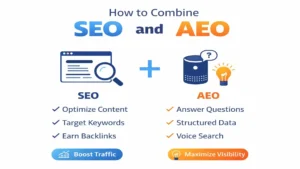
An effective SEO and AEO strategy begins with getting the basics right. Strong SEO fundamentals such as well-written, valuable content, thoughtful keyword research, and proper technical optimization create the foundation for long-term visibility. Without these elements, even the best answer-focused content may struggle to perform.
Once this foundation is in place, content can be refined to support AEO. This means going beyond keywords and focusing on how people actually ask questions. Adding clear, direct answers, using question-based headings, and writing in simple, natural language makes content easier for both users and search engines to understand. Well-structured formatting also helps AI tools and voice assistants extract information more accurately.
Including FAQ sections, short summaries, and intent-focused paragraphs allows content to serve both traditional search results and modern answer-driven platforms. Regularly reviewing featured snippets and observing changes in search behavior helps businesses stay adaptable as search continues to evolve. When SEO and AEO work together, they create a balanced strategy that supports visibility, trust, and sustainable growth.
Final Thoughts
SEO is still the backbone of digital visibility, but AEO represents the future of how people search and consume information. The question is no longer which one is better, but how well they are integrated. Businesses that adapt early and combine SEO with AEO will enjoy stronger visibility, higher trust, and sustainable growth.
In a world driven by AI, voice search, and instant answers, clarity and authority matter more than ever. By embracing both SEO and AEO, businesses can stay competitive, relevant, and prepared for the future of search.
Author : Suhana